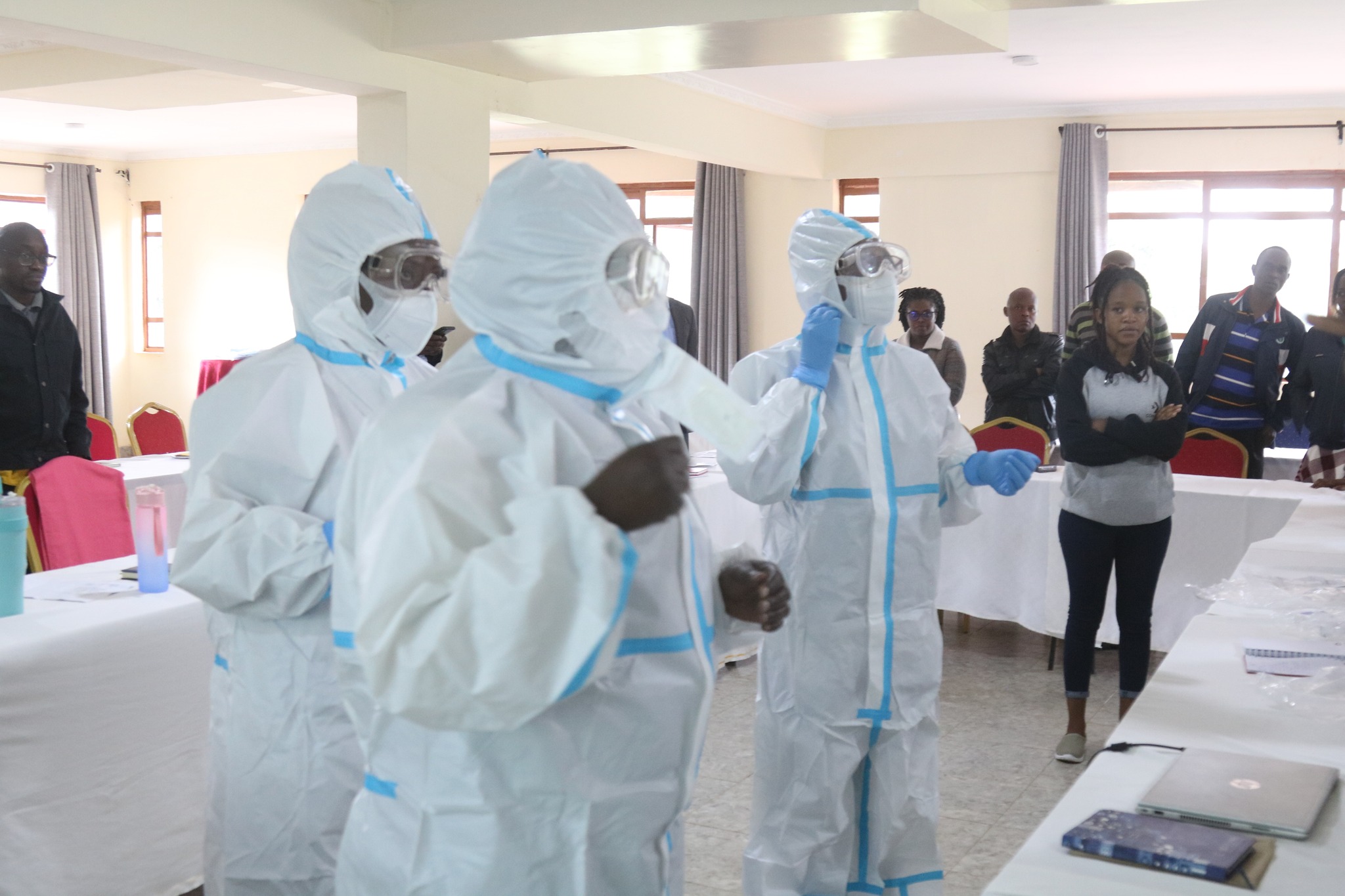
Trans Nzoia County Government today held an intensive two-day training workshop for frontline healthcare workers to bolster preparedness against Mpox, the zoonotic viral disease that has surged across Kenya.
The Sensitization and training programme attended by 55 health workers including Clinical officer and Nurses representing all 25 wards, is part of a wider push by the county’s Department of Health and Sanitation, in partnership with USAID AMPATH Uzima, to contain the outbreak before it escalates further.
Officials say the initiative comes amid rising concern over Mpox, which is marked by painful rashes, fever and swollen lymph nodes. As of July 10, Kenya has recorded 240 confirmed cases in 20 counties and five fatalities, prompting county administrations to strengthen surveillance and response capacity.
“Our goal is to enhance readiness, surveillance, diagnosis, treatment, prevention and community engagement through integrated training,” said Robert Nyandika, County Disease Surveillance Coordinator Trans Nzoia’s County Coordinator. “We are building capacity not just for immediate response but also for cascading this knowledge to other health workers through a Trainer of Trainers model.”
The workshop covered key areas critical to Mpox management:
· Epidemiology & Awareness: Identifying transmission pathways and clinical features.
· Rapid Response Protocols: Implementing isolation, containment and clinical management strategies.
· Detection & Reporting: Strengthening surveillance systems and improving communication channels.
· Prevention & Control: Emphasising strict hygiene, correct use of personal protective equipment (PPE) and respiratory etiquette.
· Community Engagement: Educating the public on behavioural changes to reduce transmission.
USAID AMPATH Uzima representative Boniface Onditi said Mpox cases have been reported in both urban and rural counties, with Kiambu, Uasin Gishu, Migori, Kisii, Kirinyaga, Isiolo, Kitui, Narok and Baringo each reporting one case. Nationwide, 54 percent of those infected are female and 46 percent male, while roughly 25 percent of cases are linked to travel from Uganda, the Democratic Republic of Congo and Rwanda.
To date, there have been 74 hospital admissions, and 37 patients managed through home‐based care, with 125 recoveries recorded. Authorities have stepped up screening at 26 points of entry, conducting an average of 18,074 traveller screenings daily, bringing the cumulative total to over 5.46 million.
“By empowering our health workforce and engaging communities, we stand a better chance of interrupting transmission chains and preventing further loss of life,” added Onditi.
Mpox can spread through direct contact with infected skin or scabs, bodily fluids such as saliva and respiratory droplets, contaminated clothing or bedding, and even vertical transmission from mother to child. Handling infected animals or their meat also poses a risk.